- Promotions
How to choose an office chair for a desk?
Contents
1. Why is choosing an office chair important?
2. What are the main criteria when choosing an office chair?
3. What else is good for a chair to have?
4. Tips for proper posture at the desk
The right office chair is not just a piece of furniture – it is a tool for health, comfort and productivity. If you sit at your desk for a long time, choosing the right chair can reduce back pain, improve your posture and make your workday more comfortable.
Why is choosing an office chair important?
An office chair is specifically designed to support your body while you work at a desk. It usually has an adjustable height, a swivel seat, and wheels for better mobility.
A well-chosen chair:
- supports proper posture;
- reduces strain on the back and neck;
- makes sitting more comfortable and productive.
This is especially important if you spend hours sitting in one place.

What are the main criteria when choosing an office chair?
Before buying a chair, consider several important factors. Each of them affects how comfortable and suitable the chair will be for your needs:
1. Ergonomics – the most important criterion
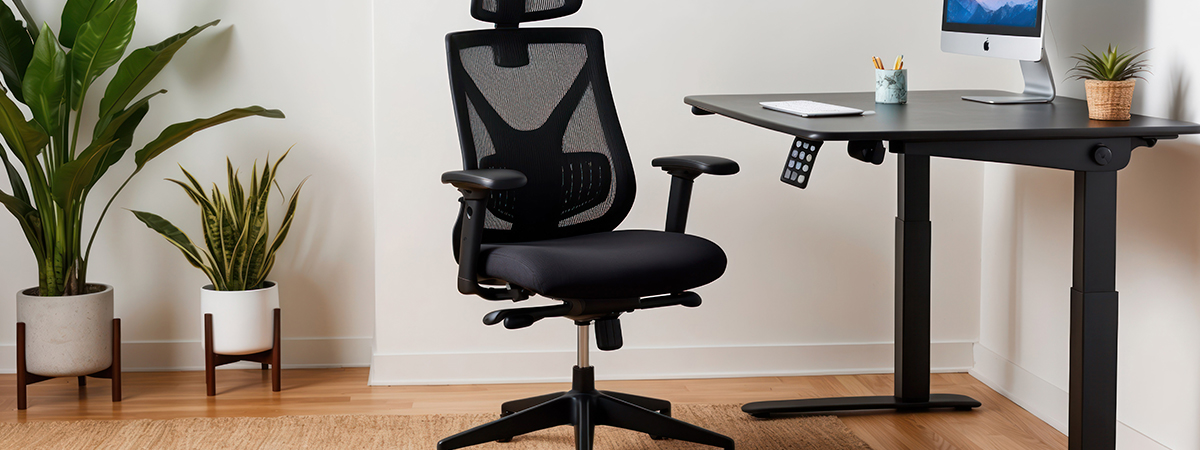
An ergonomic chair is designed to support the natural curve of your spine and allow you to sit correctly and without tension.
Key ergonomic features:
- adjustable seat height – so you can adjust the chair to your height;
- lumbar (lumbar) support – important for supporting the lower back;
- tilt and lock the backrest – to be able to lean back and change position.
A chair with good ergonomic adjustments “adjusts“ to you, rather than you forcing yourself to fit the chair.
2. Adjustability and settings
The more adjustments the chair has, the easier it will be for you to adapt it to your body.
Here are the parts that are good to adjust:
- seat height;
- backrest angle;
- seat depth (to support the hips properly);
- armrests that move up/down and/or sideways.
If the chair does not have these adjustments, it can be uncomfortable for prolonged sitting.
3. Materials and comfort
The material of the chair affects the feeling while working, especially when sitting for long periods.
What is important to know?
- mesh backrest – more breathable and cool in the warmer months;
- padded or upholstered seat – usually softer, but can retain heat;
- high-density foam – more comfortable and durable for a long time.
If you work in an indoor, warm office, mesh chairs are often more comfortable because they ventilate your back.
4. Body and posture support
A good chair helps you sit correctly. You should:
- your feet should be flat on the floor;
- your knees should form a 90° angle;
- your elbows should be at desk level.
If the chair does not support these positions, even the highest quality model may be uncomfortable for you.
5. Size and load capacity
Not all chairs are “universal“. Pay attention to:
- height and height – check if the adjustment system covers the range you need;
- maximum permissible weight – to be stable and safe.
If you are taller/shorter than the standard, choose a model that clearly indicates height and weight ranges.
What else is good for a chair?
In addition to the basic ergonomic features, some additional features can significantly improve comfort and the way you move and work during the day. It is these details that often make the difference between a “good“ and a truly comfortable office chair.
- Reclining mechanism. Some office chairs have mechanisms that allow for smooth tilting back and locking the angle - this gives more freedom of movement and helps circulation.
- Wheels and swivel. The chair should rotate 360° and move easily so you don't strain when changing your position or reaching different parts of the desk.

Tips for proper posture at the desk
The chair itself is not everything – how you sit is also important:
- keep your back straight and well supported on the backrest;
- take short breaks and move around every 30-60 minutes;
- the monitor should be at eye level, and your hands on the desk.
Choosing an office chair for your desk is an investment in your health and comfort. Don't rush into buying, check all the key features and choose a model that It adapts to your body, provides good support, and will last you a long time.